
What Retail Buyers Look For In New Food Products

Getting your food product into retail stores is a major milestone for any food startup, especially those in the consumer packaged goods category. Many first-time founders struggle with getting their products into retail stores because they don’t know what retail buyers really care about. For starters, it is important to state that a great-tasting product alone is not enough to sway a retail buyer. Retail buyers are responsible for protecting shelf space, driving sales, and reducing risk for their stores. Every new product they approve must justify its place on the shelf. If you want your product to move from idea to retail reality, you need to understand how buyers think. Below is a list of what retail buyers are looking for in a new food product: 1. A Product That Solves a Clear Consumer Need Retail buyers are constantly asking one important question: “Why would customers buy this?” Your product must fill a gap in the market or offer a strong reason for consumers to choose it over competing brands. This could include: Better taste. Health benefits. Convenience. Cultural relevance. Cleaner ingredients. Unique flavour profiles. Better pricing. Sustainability. Premium positioning. For example, consumers today increasingly look for products that are: All-natural. Low sodium or salt-free. High in protein. Plant-based. Ethically sourced. Free from artificial additives. A product without a clear positioning often struggles to get retail attention. 2. Strong Packaging and Shelf Appeal Retail shelves are crowded. Buyers know consumers make purchasing decisions quickly, often within seconds. Your packaging must: Look professional. Clearly communicate what the product is. Stand out visually. Display key benefits immediately. Meet labelling requirements. Poor packaging instantly signals risk to a buyer. Even if the product tastes excellent, weak branding can hurt your chances. Good packaging tells buyers that: You understand the market. You are serious about your business. Your product is ready for retail. 3. Proof That Customers Already Want It Retail buyers love evidence of demand because it reduces uncertainty. This proof can include: Strong farmers’ market sales. Online orders. Social media engagement. Repeat customers. Local store performance. Positive reviews. Waiting lists. Community buzz. A buyer feels more confident when they see that consumers are already responding positively to the product. This is why many successful food startups begin with smaller sales channels before approaching large retailers. 4. Reliable Supply and Production Capacity One of the fastest ways to lose retailers’ trust is to fail to supply inventory consistently. Buyers want confidence that you can: Replenish stock on time. Scale production when demand increases. Maintain consistent quality. Avoid long stockouts. Many startups underestimate the importance of operational readiness. Even small retailers may ask: Who manufactures your product? Can you handle larger purchase orders? What happens if sales increase suddenly? What is your lead time? This is where working with a contract manufacturer or building a scalable production system becomes important. 5. Competitive Pricing and Healthy Margins Retailers need products that generate profit. Your pricing must allow room for: Retail markup. Distributor margins (if

A Founder’s Step-By-Step Guide to Launching a Food Product Brand

Launching a food product brand can feel overwhelming, especially with the misconception that you need large capital, a manufacturing facility, and complex logistics. The truth is, with the right strategy and execution, you can successfully bring a food product to market with relatively moderate capital and without owning a factory. This step-by-step guide will help you navigate the process with clarity and confidence. I know because I started Nochiz Foods with very moderate capital saved from my day job.

1. Validate Your Idea
Start with a clear product concept. What problem does your food product solve? Is it healthier, more convenient, or more flavourful than existing options? Before investing heavily, test your idea with a small target audience. Gather feedback on taste, packaging, pricing, and overall appeal. Early validation helps you avoid costly mistakes later.

2. Define Your Brand Identity
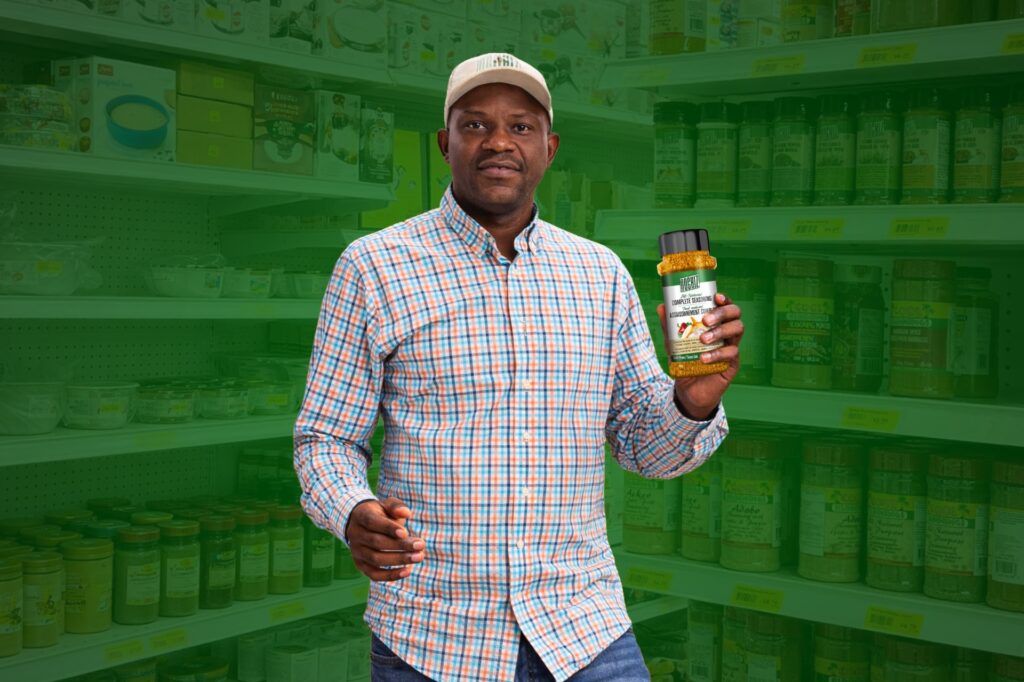
Your brand is more than just a name or logo. It’s the story, promise, and experience you deliver. Decide what your brand stands for. For Nochiz All-natural Complete seasoning, for example, a focus on health-conscious, all-natural, salt-free seasoning immediately communicates value to a specific audience. Be intentional about your messaging, tone, and visual identity from the start.

3. Develop Your Product
Refine your recipe until it consistently meets your desired quality. Standardization is critical, especially if you plan to scale. Document your ingredients, measurements, and processes carefully. This ensures that your product can be reproduced accurately, whether in small batches or through a manufacturing partner.

4. Understand Regulations and Compliance
Food businesses are heavily regulated, and compliance is non-negotiable. Research local food safety laws, labelling requirements, and certifications needed in your target market. Proper labelling, including nutritional information and ingredient lists, builds trust and helps protect your business legally.

5. Choose a Production Model
You don’t need to own a factory to launch. Many successful brands use a contract manufacturing model or commercial kitchens to produce their products. This asset-light approach reduces upfront costs and allows you to focus on branding, marketing, and distribution. Choosing the right production partner is crucial to maintaining product quality and consistency. For more insight on contract manufacturing, get this book: “From Idea to Store Shelf. The Complete Blueprint for Starting, Building, and Scaling an Asset-Light Profitable Food Brand Without the Cost, Risk, and Complexity of Owning a Factory.”

6. Create Packaging That Sells
Packaging is often the first interaction customers have with your product. Invest in design that is both functional and visually appealing. Your packaging should clearly communicate your value proposition, be attractive, and recognizable/identifiable within 5 seconds of searching a shelf. To achieve this, it is recommended that you engage a design agency to produce your label. It is an investment that will pay for itself over time.

7. Build a Go-to-Market Strategy
Decide how you will sell your product. Will you start online (using free platforms like Facebook Marketplace and WhatsApp), at local markets, or through retail stores? Many brands begin with direct-to-consumer channels to build traction and gather feedback before expanding into retail. Focus on a few channels and execute them well rather than spreading yourself too thin.

8. Market and Grow Your Brand
Leverage social media, storytelling, and community engagement to build awareness. Share your journey, educate your audience, and create content that resonates with your target market. Consistency is key—growth comes from sustained effort over time.

For a more in-depth roadmap, the workbook From Idea to Store Shelf serves as a practical, step-by-step guide for aspiring food entrepreneurs. It breaks down each stage of the process into actionable steps, helping you move from concept to a profitable, scalable brand without unnecessary complexity.

Launching a food product brand is not about having everything perfect from day one. It’s about starting with a solid foundation, learning quickly, and improving as you grow. Take the first step, stay disciplined, and build momentum—your brand can become the next success story.

FROM IDEA TO STORE SHELF: ABOUT THE AUTHOR

Nzube Odina is the Founder and CEO of Nochiz Foods, a Canadian seasoning and flavouring company built and scaled through a contract manufacturing model. Under his leadership, Nochiz products have secured placement in dozens of retail locations, demonstrating the commercial viability of an asset-light approach to food brand development.

He holds a Master of Business Administration from Nexford University, Washington, D.C., where he developed advanced expertise in e-commerce, strategy, financial management, and scalable business systems. His work focuses on capital-efficient brand building. Nzube Odina helps food entrepreneurs preserve cash flow, reduce operational risk, and maximize return on investment.

Bridging academic strategy with real-world execution, Nzube specializes in designing structured systems that move products from concept to commercial shelf placement without the burden of factory ownership.

Share Now

Leave a comment

Categories

Recent comments

A wordpress commenter on launch new mobile app

John Doe on template: comments

A wordpress commenter on launch new mobile app

John Doe on template: comments