
A Founder’s Step-By-Step Guide to Launching a Food Product Brand

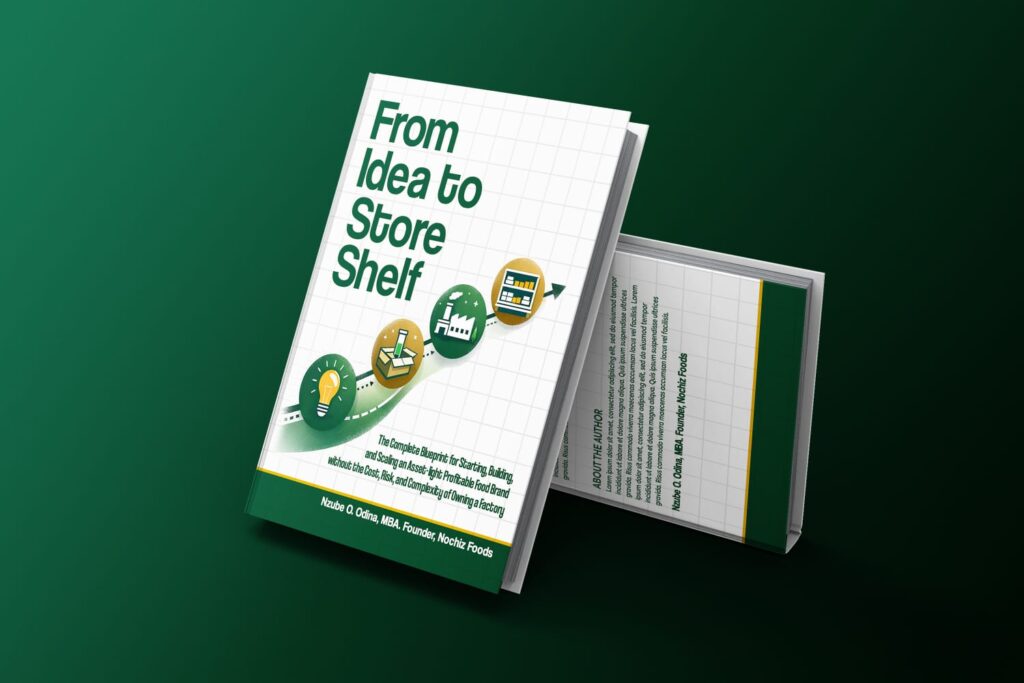
Launching a food product brand can feel overwhelming, especially with the misconception that you need large capital, a manufacturing facility, and complex logistics. The truth is, with the right strategy and execution, you can successfully bring a food product to market with relatively moderate capital and without owning a factory. This step-by-step guide will help you navigate the process with clarity and confidence. I know because I started Nochiz Foods with very moderate capital saved from my day job. 1. Validate Your Idea Start with a clear product concept. What problem does your food product solve? Is it healthier, more convenient, or more flavourful than existing options? Before investing heavily, test your idea with a small target audience. Gather feedback on taste, packaging, pricing, and overall appeal. Early validation helps you avoid costly mistakes later. 2. Define Your Brand Identity Your brand is more than just a name or logo. It’s the story, promise, and experience you deliver. Decide what your brand stands for. For Nochiz All-natural Complete seasoning, for example, a focus on health-conscious, all-natural, salt-free seasoning immediately communicates value to a specific audience. Be intentional about your messaging, tone, and visual identity from the start. 3. Develop Your Product Refine your recipe until it consistently meets your desired quality. Standardization is critical, especially if you plan to scale. Document your ingredients, measurements, and processes carefully. This ensures that your product can be reproduced accurately, whether in small batches or through a manufacturing partner. 4. Understand Regulations and Compliance Food businesses are heavily regulated, and compliance is non-negotiable. Research local food safety laws, labelling requirements, and certifications needed in your target market. Proper labelling, including nutritional information and ingredient lists, builds trust and keeps your business legally protected. 5. Choose a Production Model You don’t need to own a factory to launch. Many successful brands use a contract manufacturing model or commercial kitchens to produce their products. This asset-light approach reduces upfront costs and allows you to focus on branding, marketing, and distribution. Choosing the right production partner is crucial to maintaining product quality and consistency. For more insight on contract manufacturing, get this book- “From Idea to Store Shelf. The Complete Blueprint for Starting, Building, and Scaling an Asset-Light Profitable Food Brand Without the Cost, Risk, and Complexity of Owning a Factory.” 6. Create Packaging That Sells Packaging is often the first interaction customers have with your product. Invest in design that is both functional and visually appealing. Your packaging should clearly communicate your value proposition, be attractive, and recognizable/identifiable within 5 seconds of searching a shelf. To achieve this, it is recommended that you engage a design agency to produce your label. It is an investment that will pay for itself with time. 7. Build a Go-to-Market Strategy Decide how you will sell your product. Will you start online (using free platforms like Facebook Marketplace and WhatsApp), at local markets, or through retail stores? Many brands begin with direct-to-consumer channels to build traction and gather feedback before

Exclusive Excerpts from the Forthcoming Book: From Idea to Store Shelf (Releasing April 30, 2026)

Introduction (Page 1)

From time to time, I go on marketing visits to retail stores that carry Nochiz products, where I engage directly with shoppers and introduce them to the brand. I am often asked how Nochiz Foods came into existence. Many people are particularly intrigued by the fact that I launched Nochiz All-natural Complete Seasoning within two years of relocating to Canada.

In response, I usually explain that Nochiz operates under a contract manufacturing model; I do not own the manufacturing facility, as many assume. Rather, I work in partnership with a third-party Canadian manufacturer that handles production. My role has been to develop the product formulation and provide the investment capital. Although this explanation often satisfies casual curiosity, it rarely meets the needs of those with a strong entrepreneurial interest. These individuals frequently follow up with additional questions, seeking deeper insight into the process.

Over time, I came to realize that the brief explanations I offer, no matter how well-intentioned, are not sufficient for those who truly want to understand contract manufacturing. For many, this is their first exposure to the concept, and their desire to learn more is both natural and justified.

This workbook is my response to that curiosity. It is designed as a clear, practical, and comprehensive guide to building a brand within this business model. In this workbook, you will learn what contract manufacturing is, including its advantages and limitations, how to assess your readiness and motivation for starting, how to research viable products, and how to identify and evaluate manufacturers in your chosen industry.

You will also find guidance on selecting the appropriate business structure, setting competitive and sustainable pricing, launching your product strategically, and developing a strong brand identity that stands out in the marketplace. Finally, this workbook addresses the critical stages of scaling your business and monitoring its long-term health.

I hope this workbook serves not only as an introduction to contract manufacturing but also as a practical companion for anyone ready to transform an idea into a viable and enduring business.

About the Author

Nzube Odina is the Founder and CEO of Nochiz Foods, a Canadian seasoning and flavouring company built and scaled through a contract manufacturing model. Under his leadership, Nochiz products have secured placement in dozens of retail locations, demonstrating the commercial viability of an asset-light approach to food brand development.

He holds a Master of Business Administration from Nexford University, Washington, D.C., where he developed advanced expertise in e-commerce, strategy, financial management, and scalable business systems. His work focuses on capital-efficient brand building. Nzube Odina helps food entrepreneurs preserve cash flow, reduce operational risk, and maximize return on investment.

Bridging academic strategy with real-world execution, Nzube specializes in designing structured systems that move products from concept to commercial shelf placement without the burden of factory ownership.

Share Now

Leave a comment

Categories

Recent comments

A wordpress commenter on launch new mobile app

John Doe on template: comments

A wordpress commenter on launch new mobile app

John Doe on template: comments