
What Retail Buyers Look For In New Food Products

Getting your food product into retail stores is a major milestone for any food startup, especially those in the consumer packaged goods category. Many first-time founders struggle with getting their products into retail stores because they don’t know what retail buyers really care about. For starters, it is important to state that a great-tasting product alone is not enough to sway a retail buyer. Retail buyers are responsible for protecting shelf space, driving sales, and reducing risk for their stores. Every new product they approve must justify its place on the shelf. If you want your product to move from idea to retail reality, you need to understand how buyers think. Below is a list of what retail buyers are looking for in a new food product: 1. A Product That Solves a Clear Consumer Need Retail buyers are constantly asking one important question: “Why would customers buy this?” Your product must fill a gap in the market or offer a strong reason for consumers to choose it over competing brands. This could include: Better taste. Health benefits. Convenience. Cultural relevance. Cleaner ingredients. Unique flavour profiles. Better pricing. Sustainability. Premium positioning. For example, consumers today increasingly look for products that are: All-natural. Low sodium or salt-free. High in protein. Plant-based. Ethically sourced. Free from artificial additives. A product without a clear positioning often struggles to get retail attention. 2. Strong Packaging and Shelf Appeal Retail shelves are crowded. Buyers know consumers make purchasing decisions quickly, often within seconds. Your packaging must: Look professional. Clearly communicate what the product is. Stand out visually. Display key benefits immediately. Meet labelling requirements. Poor packaging instantly signals risk to a buyer. Even if the product tastes excellent, weak branding can hurt your chances. Good packaging tells buyers that: You understand the market. You are serious about your business. Your product is ready for retail. 3. Proof That Customers Already Want It Retail buyers love evidence of demand because it reduces uncertainty. This proof can include: Strong farmers’ market sales. Online orders. Social media engagement. Repeat customers. Local store performance. Positive reviews. Waiting lists. Community buzz. A buyer feels more confident when they see that consumers are already responding positively to the product. This is why many successful food startups begin with smaller sales channels before approaching large retailers. 4. Reliable Supply and Production Capacity One of the fastest ways to lose retailers’ trust is to fail to supply inventory consistently. Buyers want confidence that you can: Replenish stock on time. Scale production when demand increases. Maintain consistent quality. Avoid long stockouts. Many startups underestimate the importance of operational readiness. Even small retailers may ask: Who manufactures your product? Can you handle larger purchase orders? What happens if sales increase suddenly? What is your lead time? This is where working with a contract manufacturer or building a scalable production system becomes important. 5. Competitive Pricing and Healthy Margins Retailers need products that generate profit. Your pricing must allow room for: Retail markup. Distributor margins (if

The Common Mistakes First-Time Food Founders Make and How to Avoid Them

Starting a food business is exciting—your recipe, your brand, your vision coming to life. But the reality is, most first-time food founders don’t fail because their product is bad. They fail because they underestimate the complexity of turning a great idea into a scalable, regulatory-compliant, and profitable business.
If you’re serious about building a food brand, you need to avoid the traps that catch almost everyone at the beginning.

1. Falling in Love With the Product, Not the Market
Many founders build products based on personal taste rather than market demand. Just because your friends love your seasoning or sauce doesn’t mean retailers or the broader market will. Beyond what your close kin and friends are saying, you need to carry out market research in the real world with a broader range of people, taking into consideration emerging trends, changing consumer habits and behaviours, retailers’ views on what people are frequently buying or asking for, and online data analytics of your proposed product’s category.

Smart Founders Validate The Following Early:

Who their target customer is.

The broad existence of the problem their product solves.

The reason why someone should choose their brand over established brands.

Ignoring these leads to slow sales and expensive rebranding later.


2. Underestimating Regulations and Compliance
Food is not like selling T-shirts. There are strict requirements around:

Labelling

Ingredients

Nutritional information

Food safety standards

Many first-time founders either ignore these or deal with them too late, which can delay launches or even lead to products being pulled from shelves.


3. Trying to Do Everything Themselves
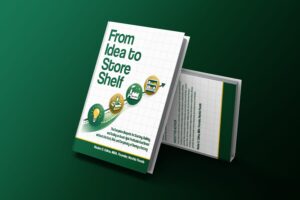
You don’t need to own a factory to build a food brand. Yet many beginners waste time and money trying to produce everything on their own. The Implementation Workbook, From Idea to Store Shelf, is a valuable resource on how to start a food business without owning a factory. The book advocates contract manufacturing as the best business model a startup can use to enter the food industry, at a very low cost and reduced risk.
Contract manufacturing (co-packing) is the smartest way for startup founders to:

Scale faster

Maintain consistency

Reduce operational headaches

Refusing to leverage this option often keeps founders stuck in “small batch mode.”


4. Poor Pricing Strategy
Pricing is where many founders quietly kill their business.
Common mistakes include:

Pricing too low to attract customers.

Not factoring in retailer margins.

Ignoring production and logistics costs

If your numbers don’t work at scale, growth will only make things worse—not better.


5. Weak Branding and Positioning
A great product with poor branding will struggle on the shelf. First-time founders often overlook:

Packaging design

Clear messaging

Unique selling proposition

In retail, perception drives purchase. If your product doesn’t stand out in seconds, it gets ignored. The importance of branding and product positioning cannot be overstated. In the Implementation Workbook, From Idea to Store Shelf, the concept of Branding and Positioning features prominently in the workbook, underscoring the importance of branding a product correctly.


6. Lack of a Clear Go-To-Market Strategy
Many founders launch and “hope people buy.” That’s not a strategy.
You need a plan for:

How customers will discover your product

Where to start selling first (online, local stores, or farmers’ markets)

How to build traction before approaching large retailers

Without these, even a great product will sit unsold.


7. Ignoring Cash Flow Realities
Retail and food production are cash-intensive. Payments can be slow, while expenses are constant.
New founders often:

Underestimate startup costs

Overproduce inventory

Run out of cash before gaining traction.

This is one of the fastest ways to shut down a promising brand.


8. Scaling Too Early or Too Late
Some founders rush into retail before they’re ready. Others stay too small for too long.
Scaling too early leads to:

Production issues

Inconsistent quality

Supply chain breakdowns

Scaling too late means missed opportunities.
Timing matters—and most beginners get it wrong.

A Smarter Way to Navigate These Pitfalls

Here’s the truth: most founders make these mistakes. It is common because startup founders don’t usually know better. While some learn from their own mistakes and later make amends, others end up in the failed-business grave. These preventable missteps cost money, irredeemable lost time, and missed opportunities. As a food founder, I have seen this happen over and over again. This was why I took the time to create and publish From Idea to Store Shelf: The Complete Blueprint for Starting, Building, and Scaling an Asset-Light Profitable Food Brand Without the Cost, Risk, and Complexity of Owing a Factory. It is an Implementation Workbook that gives food founders a clear roadmap on how to start, nurture, and scale a food brand.

It doesn’t just inspire—it guides. It helps founders:

Think through their product-market fit.

Understand the realities of production and scaling.

Avoid costly beginner mistakes.

Build with structure instead of guesswork.

If someone is serious about launching a food brand—not just experimenting—having a step-by-step framework as carefully structured in From Idea to Store Shelf can save months (or years) of trial and error.

Conclusion
Starting a food business isn’t just about passion—it’s about execution. The sooner you treat it like a real business, the faster you move From Idea to Store Shelf.
Avoid the common mistakes, stay disciplined, and use the right tools. That’s how you give your product a real shot at success.

Share Now

Leave a comment

Categories

Recent comments

A wordpress commenter on launch new mobile app

John Doe on template: comments

A wordpress commenter on launch new mobile app

John Doe on template: comments