
What Retail Buyers Look For In New Food Products

Getting your food product into retail stores is a major milestone for any food startup, especially those in the consumer packaged goods category. Many first-time founders struggle with getting their products into retail stores because they don’t know what retail buyers really care about. For starters, it is important to state that a great-tasting product alone is not enough to sway a retail buyer. Retail buyers are responsible for protecting shelf space, driving sales, and reducing risk for their stores. Every new product they approve must justify its place on the shelf. If you want your product to move from idea to retail reality, you need to understand how buyers think. Below is a list of what retail buyers are looking for in a new food product: 1. A Product That Solves a Clear Consumer Need Retail buyers are constantly asking one important question: “Why would customers buy this?” Your product must fill a gap in the market or offer a strong reason for consumers to choose it over competing brands. This could include: Better taste. Health benefits. Convenience. Cultural relevance. Cleaner ingredients. Unique flavour profiles. Better pricing. Sustainability. Premium positioning. For example, consumers today increasingly look for products that are: All-natural. Low sodium or salt-free. High in protein. Plant-based. Ethically sourced. Free from artificial additives. A product without a clear positioning often struggles to get retail attention. 2. Strong Packaging and Shelf Appeal Retail shelves are crowded. Buyers know consumers make purchasing decisions quickly, often within seconds. Your packaging must: Look professional. Clearly communicate what the product is. Stand out visually. Display key benefits immediately. Meet labelling requirements. Poor packaging instantly signals risk to a buyer. Even if the product tastes excellent, weak branding can hurt your chances. Good packaging tells buyers that: You understand the market. You are serious about your business. Your product is ready for retail. 3. Proof That Customers Already Want It Retail buyers love evidence of demand because it reduces uncertainty. This proof can include: Strong farmers’ market sales. Online orders. Social media engagement. Repeat customers. Local store performance. Positive reviews. Waiting lists. Community buzz. A buyer feels more confident when they see that consumers are already responding positively to the product. This is why many successful food startups begin with smaller sales channels before approaching large retailers. 4. Reliable Supply and Production Capacity One of the fastest ways to lose retailers’ trust is to fail to supply inventory consistently. Buyers want confidence that you can: Replenish stock on time. Scale production when demand increases. Maintain consistent quality. Avoid long stockouts. Many startups underestimate the importance of operational readiness. Even small retailers may ask: Who manufactures your product? Can you handle larger purchase orders? What happens if sales increase suddenly? What is your lead time? This is where working with a contract manufacturer or building a scalable production system becomes important. 5. Competitive Pricing and Healthy Margins Retailers need products that generate profit. Your pricing must allow room for: Retail markup. Distributor margins (if
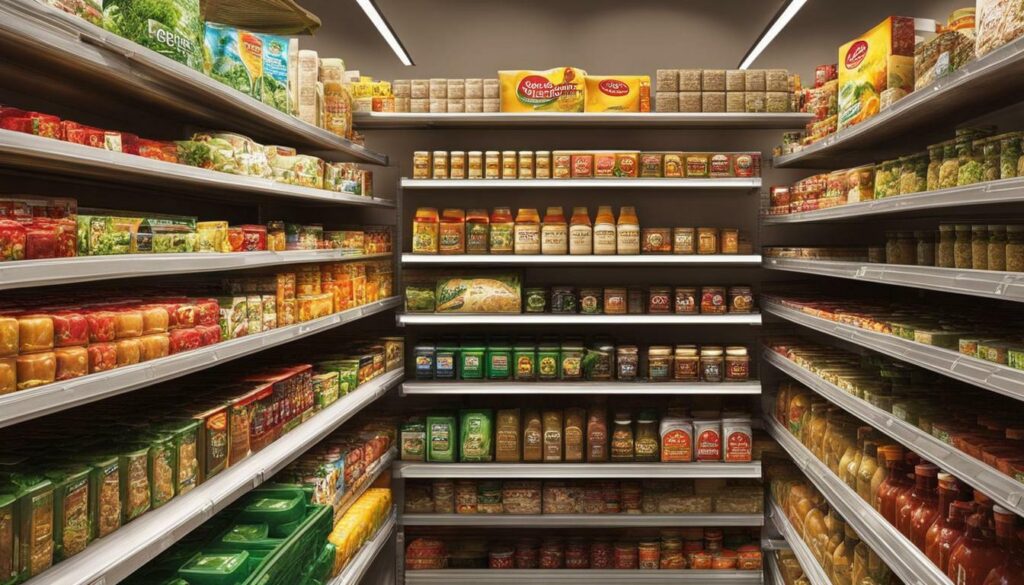

How to Get Your Food Product into Retail Stores

Getting your food product onto retail shelves is one of the most important and challenging milestones in building a successful food brand. It requires more than a great recipe; it demands preparation, positioning, and persistence. Here’s a practical guide to help you move from idea to retail reality:

1. Build a Retail-Ready Product
Before approaching any store, your product must meet retail standards. This includes professional packaging, compliant labelling (ingredients, nutrition facts, barcodes), and consistent quality. Retailers are not just buying your product—they are buying reliability. If you cannot deliver the same product at scale, consistently, you will struggle to stay on shelves.

2. Define Your Unique Value Proposition
Retail buyers see hundreds of products. If yours doesn’t stand out immediately, it gets ignored. Ask yourself: what makes your product different? Is it healthier, more convenient, culturally unique, or better tasting? Be clear and specific. “High quality” is not a differentiator—almost every brand claims that. Your value must be obvious and easy to communicate.

3. Start Small and Prove Demand
Don’t aim for large chains first. Independent stores, specialty shops, and local markets are your training ground. These retailers are more open to new products and give you a chance to build sales data. Strong sales performance in smaller stores, backed by data, can help convince major buyers at large chains to give you a try.

4. Price for Retail Success
Your pricing must work for both you and the retailer. Stores typically expect margins of 30–50%. If your product is too expensive, it won’t move. If it’s too cheap, you won’t survive. Reverse-engineer your pricing: start with the retail price, factor in the retailer’s margin, and ensure you still have a viable profit.

5. Prepare a Strong Sales Pitch
When you approach a buyer, be direct and prepared. Your pitch should clearly answer three questions:

What is your product?

Why will customers buy it?

Why should this store carry it?

Support your pitch with data if possible—customer feedback, sales numbers, or market trends. Keep it concise and confident.

6. Understand Distribution Options
You can sell directly to stores or work with distributors. Direct sales give you more control and better margins but require more effort. Distributors can help you scale faster, but take a percentage. Early on, many brands start direct, then transition to distribution as demand grows.

7. Focus on Sell-Through, Not Just Placement
Getting into a store is only half the battle. Staying there depends on how fast your product sells. Support your product with in-store demos, promotions, and local marketing. If your product sits on the shelf, it will be replaced—no matter how good it is.

8. Be Persistent and Professional
Rejection is part of the process. Buyers are busy, and timing matters. Follow up respectfully, improve your offer, and keep going. Consistency and professionalism often make the difference between brands that break through and those that stall.

If you want a deeper, structured approach to navigating this journey, the workbook, From Idea to Store Shelf, provides a comprehensive roadmap. It walks through everything from product development and positioning to retail strategy and scaling—giving you the tools to move forward with clarity and confidence.
Getting into retail isn’t luck—it’s execution. Focus on preparation, prove your value, and stay persistent. That’s how products earn their place on store shelves—and keep it.

Share Now

Leave a comment

Categories

Recent comments

A wordpress commenter on launch new mobile app

John Doe on template: comments

A wordpress commenter on launch new mobile app

John Doe on template: comments